
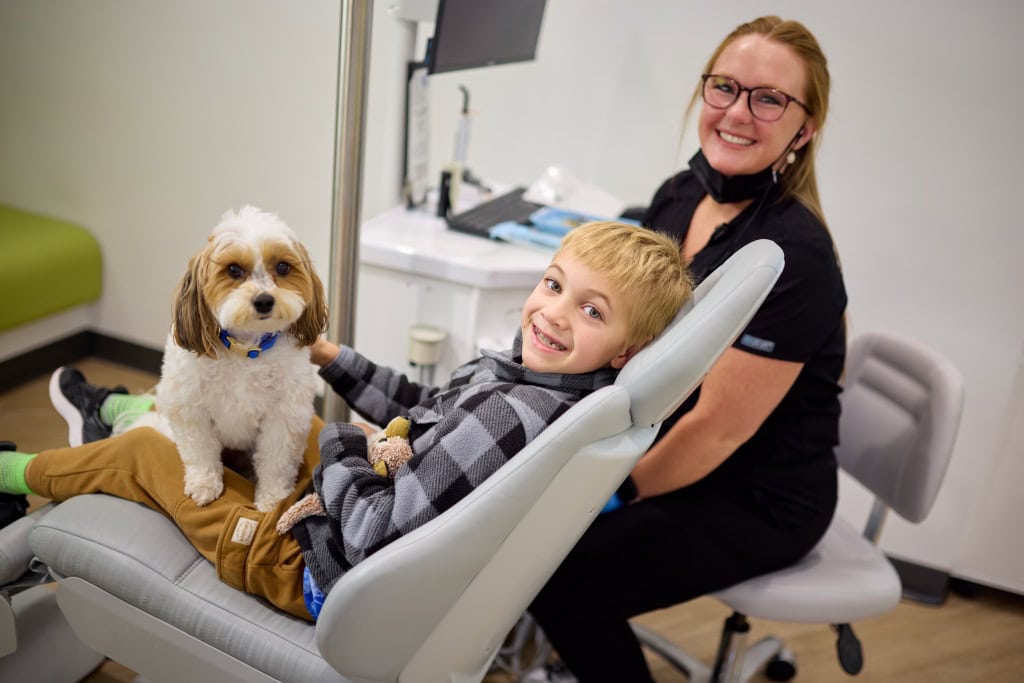
Finding the right orthodontist for your child matters more than most parents expect. The treatment your child receives now shapes how their jaw develops, how their teeth align, and how confident they feel for years to come.
When choosing an orthodontist for your child, look for Board-Certified credentials, a child-focused practice environment, up-to-date technology, clear communication, and a range of treatment approaches suited to growing mouths. These five factors give you the strongest foundation for making a confident decision.
Not every orthodontist works with children the same way. Some practices focus heavily on adult patients, while others build their entire approach around kids and teens. The American Association of Orthodontists recommends children have their first evaluation by age 7. This early screening catches potential issues before they become bigger concerns.
What Makes Choosing the Right Orthodontist So Important?
When you choose wisely, you set your child up for a smoother treatment and better results. The wrong fit can mean unnecessary retreatment, longer timelines, or complications that could have been avoided. A practice that genuinely understands children creates an environment where kids feel safe, and that comfort translates directly into better cooperation during appointments and at-home care.
Your child deserves a Board-Certified orthodontist who sees them as more than a set of teeth. They deserve someone who takes time to explain what's happening, involves you in every decision, and makes every appointment feel doable. The right practice welcomes children, teens and adults from the first visit and treats each patient like family rather than a number on a schedule.
How to Evaluate an Orthodontist: A Step-by-Step Guide
Choosing an orthodontist doesn't have to feel overwhelming. Breaking it down into clear steps helps you make a confident decision.
How Do You Verify an Orthodontist's Credentials?
Start by confirming the orthodontist completed a specialized residency program after dental school. This training typically lasts two to three years and focuses exclusively on tooth movement, jaw alignment, and facial development. Look for Board Certification from the American Board of Orthodontics. This designation means the orthodontist voluntarily pursued additional testing and peer review to demonstrate their expertise.
What Treatment Options Should You Research?
Different practices offer different approaches. You'll find some that focus primarily on traditional metal braces, while others provide everything from clear aligners to ceramic braces, two-phase treatment for younger children, and airway-focused orthodontics. What matters most is whether the practice recommends treatments based on your child's specific needs. When multiple approaches are available, care can be tailored to your child's unique situation rather than limited to a single method.
What Should You Look for During a Consultation?
Nothing replaces visiting the office in person. Watch whether the team gets down to your child's eye level and explains things in language they actually understand. Notice if the space feels welcoming or intimidating. A free consult gives you the chance to see the practice culture firsthand and ask every question on your list.
How Does Technology Affect Your Child's Treatment?
Modern orthodontic practices use digital imaging, 3D scanning, and computer-aided treatment planning. These tools create more precise diagnoses and often lead to shorter treatment times. You'll want to know what technology a practice uses and how it benefits your child's care. Advanced tools like iTero scanners, for example, eliminate messy impressions and give families a clear picture of projected results before treatment even begins.
How Do You Evaluate Communication Style?
You want an orthodontist who answers your questions thoroughly and involves you in decisions. Notice whether they explain the "why" behind their recommendations. Transparency about treatment options, timelines, and costs matters. If something feels rushed or unclear during the consultation, that pattern likely continues throughout treatment.
A good free consult should let you experience all five of these steps firsthand, so you leave with real answers rather than a sales pitch. Pay attention to how the team interacts with your child, and trust your instincts about whether the practice feels like the right fit.
What Are the Benefits of Choosing a Qualified, Child-Focused Orthodontist?
A qualified, child-focused orthodontist delivers more accurate diagnoses, reduces your child's anxiety, and offers treatment options designed for growing mouths. Here's what that looks like in practice.
Why Does Specialist Training Lead to Better Diagnoses?
- Accurate diagnosis from the start. A specialist trained in pediatric cases recognizes subtle issues a general practitioner might miss. Getting the diagnosis right means treatment works the first time, saving your family time and stress.
- Access to the latest options. From Invisalign designed for growing mouths to accelerated techniques, a qualified orthodontist offers choices that match your child's lifestyle and developmental stage.
How Does a Child-Friendly Environment Reduce Anxiety?
- Less anxiety, better cooperation. Practices designed around children use age-appropriate explanations, friendly team members, and environments that feel safe rather than clinical. Kids who feel comfortable cooperate better, which means fewer difficult appointments and faster progress overall.
- Airway and jaw screening. Some orthodontists screen for breathing concerns, tongue posture issues, and jaw irregularities. Catching these early prevents bigger health issues later, and it gives families more options for how to address them.
How Does Getting It Right the First Time Save Families Money?
- Fewer retreatments down the road. When treatment is done right the first time, your child is less likely to need corrections later. That saves money and frustration, and it means fewer years spent in braces or aligners.
Every child deserves a beautiful smile they love. Board-Certified orthodontists who bring years of specialized training to every patient deliver the highest standard of care, and that commitment starts with getting the foundation right during childhood. It's how great smiles are crafted to last.
Orthodontist vs. General Dentist: Who Should Treat Your Child?
Many parents wonder whether their family dentist can handle orthodontic treatment. Here's how the two compare:
| Factor | Orthodontist | General Dentist |
|---|---|---|
| Training | 2-3 years of specialty residency after dental school | General dental training only |
| Focus | Exclusively tooth movement, bite correction, and jaw alignment | Broad range of dental services |
| Pediatric Expertise | Deep understanding of growth patterns in children | Limited focus on developmental orthodontics |
| Technology | Orthodontic-specific imaging and treatment planning tools | General dental equipment |
| Board Certification | Available through American Board of Orthodontics (ABO) | Not applicable to orthodontic care |
| Complex Cases | Trained to handle difficult bite issues, jaw discrepancies, and two-phase treatment | May refer complex cases to specialists |
General dentists can offer aligner treatment for straightforward cases. But when it comes to your child's developing jaw and bite, a specialist brings expertise that makes a real difference. Orthodontists spend their entire careers focused on this one area of dentistry.
Board Certification signals an extra level of commitment. Orthodontists who pursue this credential submit their cases for peer review and pass rigorous examinations. According to the American Board of Orthodontics, this process confirms that patients and families receive care from practitioners dedicated to ongoing excellence. At Westfall Orthodontics, both Dr. Westfall and Dr. Weaver are Board-Certified, reflecting that same dedication to the highest standard of care.
For children especially, growth patterns matter enormously. A Board-Certified orthodontist recognizes when to start treatment, when to wait, and how to guide jaw development in ways that benefit your child for life.
What Affects the Cost of Your Child's Orthodontic Treatment?
The cost of your child's orthodontic treatment depends on several factors: the type of braces or aligners used, the complexity of the case, the length of treatment, and your insurance coverage. Two-phase treatment for younger children typically costs more than single-phase correction.
Here's how each factor breaks down:
Treatment type plays a significant role. Traditional metal braces, ceramic braces, and clear aligners each come with different price points. Two-phase treatment, which addresses jaw development early before full braces later, involves more appointments and typically costs more than single-phase treatment. General cost ranges vary widely, with braces often falling between $3,000 and $7,000 and clear aligners between $3,500 and $8,000, though your child's specific case will determine the final number.
How complex is your child's case? A child with mild crowding needs less intervention than one with a severe bite issue or jaw discrepancy. More complex cases require longer treatment times and more adjustments, which naturally affects the total cost.
Most families are surprised by how much insurance coverage varies. Some plans cover a portion of orthodontic treatment for children, while others offer nothing. Check with your insurance provider before your consultation so you can plan accordingly.
Many practices spread costs over time with affordable payment plans that keep monthly payments manageable. Cost shouldn't prevent any child from getting the smile they deserve, so look for an office that works with your budget and offers transparent pricing from the start.
Free consultations remove guesswork. A practice that offers a free consult lets you understand exactly what treatment involves and what it costs before you commit to anything. Here's the reality: the cheapest option isn't always the best value. An experienced, Board-Certified orthodontist may charge more than a general dentist offering aligners, but the expertise often means better results and fewer complications. Consider the full picture when comparing costs.
What Are the Signs Your Child May Be Ready for an Orthodontic Evaluation?
How do you know when it's time to schedule that first appointment? Common signs your child may need an orthodontic evaluation include early or late tooth loss, visible crowding, bite misalignment, breathing difficulties, and protruding front teeth. If you notice any of these, scheduling an evaluation gives you information and options, even if treatment doesn't start right away. Watch for these specific indicators:
- Early or late loss of baby teeth. If your child loses teeth much earlier or later than their peers, it can signal underlying alignment or spacing issues that benefit from early monitoring.
- Crowding, twisting, or spacing. Teeth that overlap, twist, or have large spaces between them often benefit from orthodontic guidance, even if treatment doesn't start right away.
- Crossbites, overbites, or underbites. When your child's teeth don't come together evenly as they bite down, an orthodontist should evaluate the situation. Left unaddressed, these bite issues can affect jaw growth and even how your child eats and speaks.
- Protruding front teeth are more vulnerable to injury and may indicate jaw positioning concerns.
- Mouth breathing, snoring, or jaw clicking. These symptoms can point to airway issues or jaw joint concerns that orthodontic treatment may address. Many parents don't realize these connect to orthodontics, but they absolutely do.
- If your child struggles to bite into foods or chews awkwardly, their bite alignment may need attention.
The AAO recommends age 7 as the ideal time for a first orthodontic screening. At this age, children have a mix of baby and permanent teeth, and an orthodontist can spot developing issues. This doesn't mean treatment starts immediately. In many cases, the orthodontist simply monitors growth and waits for the right moment to begin. Early evaluation keeps you ahead of surprises rather than reacting to concerns that have already progressed. Many practices, including Westfall Orthodontics, offer complimentary evaluations for children so families can get answers early.
Frequently Asked Questions About Choosing a Child's Orthodontist
At What Age Should My Child First See an Orthodontist?
The American Association of Orthodontists recommends age 7 for a child's first orthodontic evaluation. At this age, enough permanent teeth have typically emerged for an orthodontist to identify potential issues. Early screening doesn't mean early treatment. Often, the orthodontist monitors your child's development and recommends waiting until more teeth come in before starting anything active.
What Questions Should I Ask at a Consultation?
Come prepared with questions about credentials, treatment options, expected timeline, and total costs. Find out how the practice handles emergencies, what technology they use, and how they communicate progress updates. You'll also want to know whether the orthodontist has specific experience with children and what their approach looks like for young patients. The best consultations feel like conversations, not presentations.
Is Invisalign an Option for Children?
Yes, and many children are good candidates. Invisalign offers versions designed specifically for growing mouths. The best option depends on your child's age, the complexity of their case, and their ability to wear aligners consistently. Your orthodontist can help determine whether aligners or braces make more sense based on your child's specific situation.
How Do I Know If an Orthodontist Is Board Certified?
You can verify Board Certification through the American Board of Orthodontics website. Simply search the orthodontist's name to confirm their status. Board Certification requires passing written and clinical examinations plus ongoing case review, and it demonstrates a commitment to excellence beyond the minimum requirements for practicing orthodontics. Both Dr. Westfall and Dr. Weaver at Westfall Orthodontics hold this distinction, reflecting their dedication to the highest standard of care.
Should I Get a Second Opinion Before Starting Treatment?
Getting a second opinion is always reasonable, especially for complex cases or if something about the initial recommendation doesn't sit right. Different orthodontists may suggest different approaches, and comparing perspectives helps you feel confident in your decision. Most practices offer free consultations, making second opinions easy and low-pressure to pursue. Even a short conversation with another orthodontist can confirm you're on the right track or reveal an approach you hadn't considered.
Your child's smile is worth getting right. When you're ready to take the next step, consider scheduling a free consult with a Board-Certified orthodontist who specializes in treating children, teens and adults. The right practice will answer your questions, explain your options, and help you feel confident about the path forward. That first conversation is often all it takes to turn uncertainty into a clear plan for life-changing smiles.